Novembre 2024
Production of green hydrogen with alternative methods that combine high performance with low economic and environmental impacts.
Kwords: green hydrogen, water electrolyse, decarbonisation
Ing. Italo luigi de Paoli Ph.D 33097 Spilimbergo (PN) Italy https:// italoluigi.com
Abstracts;
In the coming years, renewable hydrogen, or green hydrogen, will play a fundamental role in decarbonisation in different sectors of everyday life, sectors where the use of now consolidated technologies will still be present on the market for many years, however this step will be fundamental in combating global warming. However, the production of renewable hydrogen still presents many critical issues that make it uncompetitive both in terms of costs and marketing when compared with traditional fossil fuels. This competitive gap is mainly related to the moderate energy efficiency and high costs in the current production of traditional electrolysers that use water as the primary production source. Here we want to introduce a water electrolysis system where we make use of very low cost construction components, which are easily recoverable on the market, in which water is supplied to the electrodes which evolve hydrogen and oxygen through transport under light pressure, to the inside of porous separators arranged between the anode and the cathode. The system allows direct contact with a surface layer of water that develops on the surface of the porous septum and where the reaction occurs without the formation of bubbles on the electrodes. In this study, different porous separators were tested, subjected to alkaline hydrolysis under the same different operating conditions (same current applied, same percentage of electrolyte used, etc.) in order to identify the best functional and performance characteristics. Among the various alternatives tested, in particular an alkaline electrolysis, demonstrates water electrolysis performance superior to commercial electrolysis cells. This alternative made use of porous septa with high absorption and easily recoverable on the market, which were soaked with electrolyte having a concentration of potassium hydroxide (K OH) of 7%. An electric current was made to flow between the electrodes made of 316 stainless steel with an intensity varying between 0.08 A / cm 2 and 1.0 A / cm 2 , the temperatures inside the cells were monitored where the values found demonstrated a variability of between 92°C and 96°C. The average voltage applied to the electrodes proved to vary between 1.87V and 3.2V depending on the separator used, while the average energy efficiency proved to be higher than 90%, with an average energy consumption in first approximation can be estimated at 44 kW/kg – 45 kW/kg (compared to ~47.5 kW/kg in commercial electrolysis cells). The high energy efficiency, combined with a high construction simplification and a low investment cost in the creation of the electrolytic cell, brings green hydrogen closer to a future of truly competitive production and plant costs.
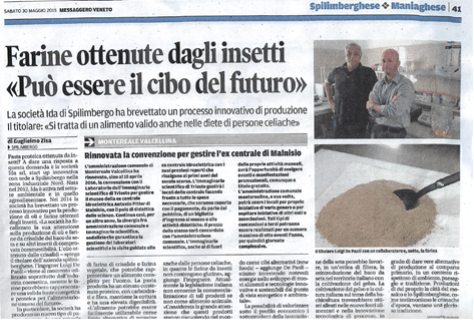
30 Maggio 2015
La società Ida di Spilimbergo ha brevettato un processo innovativo di produzione Il titolare: «Si tratta di un alimento valido anche nelle diete di persone celiache»
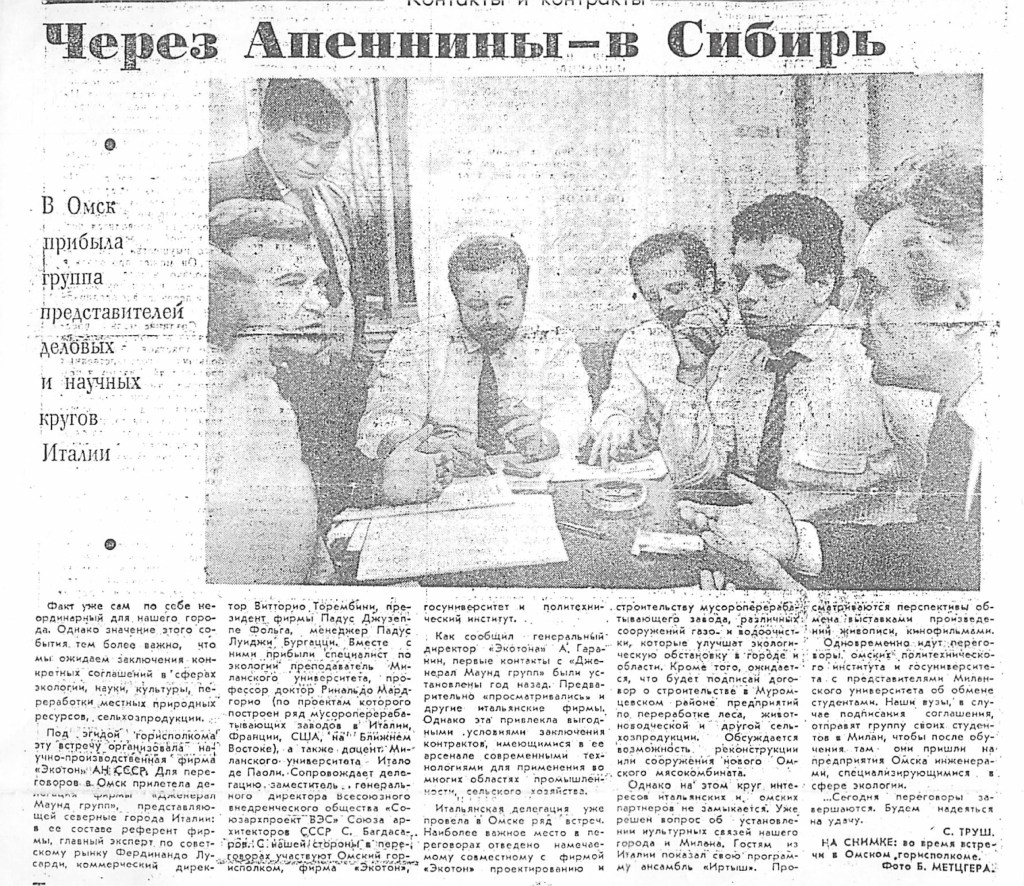
Dicembre 1992
Realizzazione di un impianto di termovalorizzazione per rifiuti soldi, urbani e industriali da realizzarsi nella città di Omsk, nell’ambito della collaborazione tra l’Italia e la Repubblica Russa
 DE PAOLI ITALO LUIGI PH.D